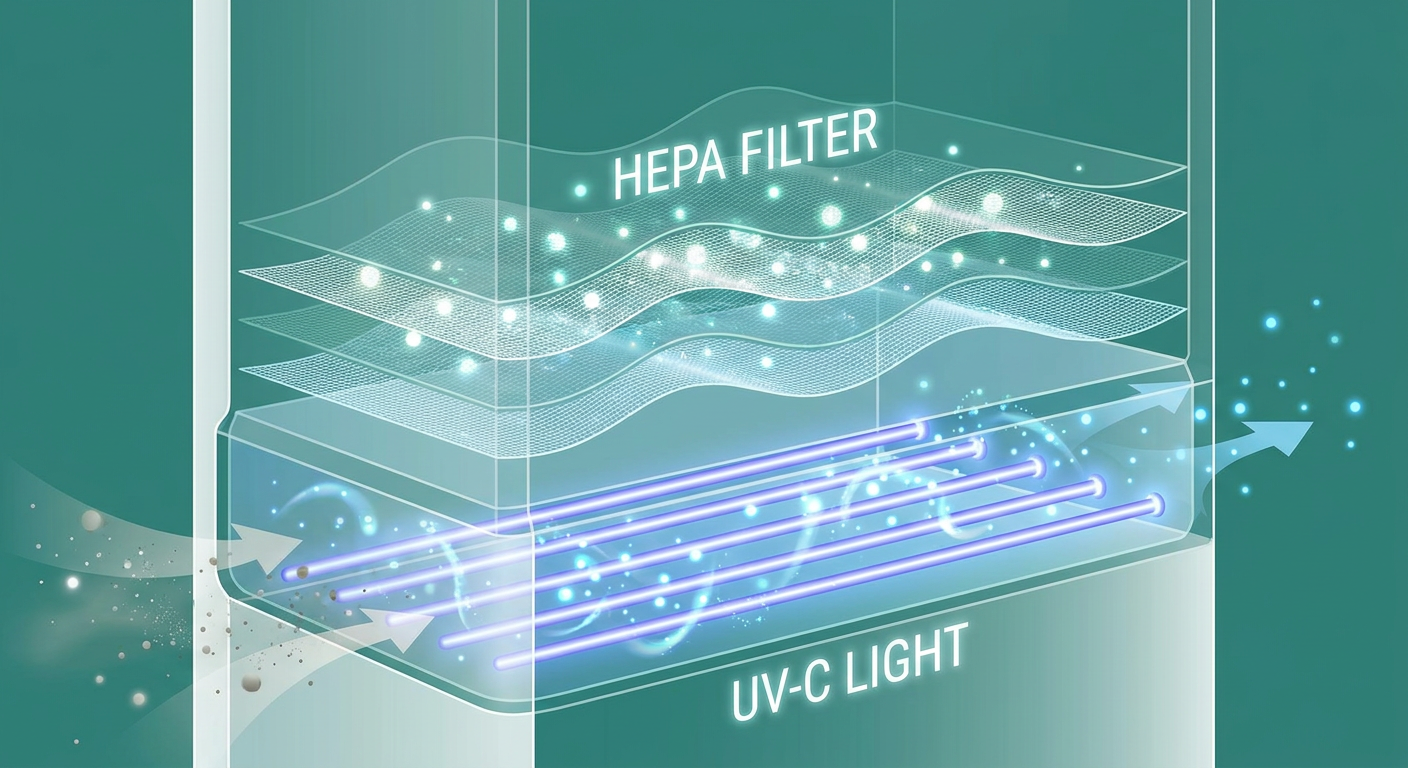
Walk into any electronics retailer and you will find a wall of air purifiers all claiming to clean your air. The vast majority use the same fundamental approach: a fan draws air through a HEPA filter, capturing particles, and the cleaned air is pushed back into the room. This is passive filtration, and it works, within limits.
What filtration does
HEPA filtration captures particles in air that passes through the filter. Room size, airflow, placement and maintenance all affect how a portable unit performs in use.
Air cleaning should sit alongside ventilation, cleaning and control of the source. A purifier cannot repair damp or replace appropriate removal of established mould.
What active purification does differently
“Active” describes several different technologies, including ionisation and photocatalytic oxidation. They should not be treated as interchangeable. Ask which technology is present, how it has been tested and what operating restrictions apply.
- Check which technologies the particular model uses.
- Read test reports with their conditions and limitations.
- Look for information about emissions, maintenance and intended use.
Which is right for you?
Start with the problem you are trying to address. For particle filtration, compare the room requirements, airflow and filter specification. If considering additional technologies, ask for evidence relevant to that model and use case.
Some devices intentionally generate ozone, and some technologies can produce it as a by-product. Ozone can irritate the lungs. Do not assume an ozone-generating model is suitable for an occupied room; review its instructions and seek appropriate advice.